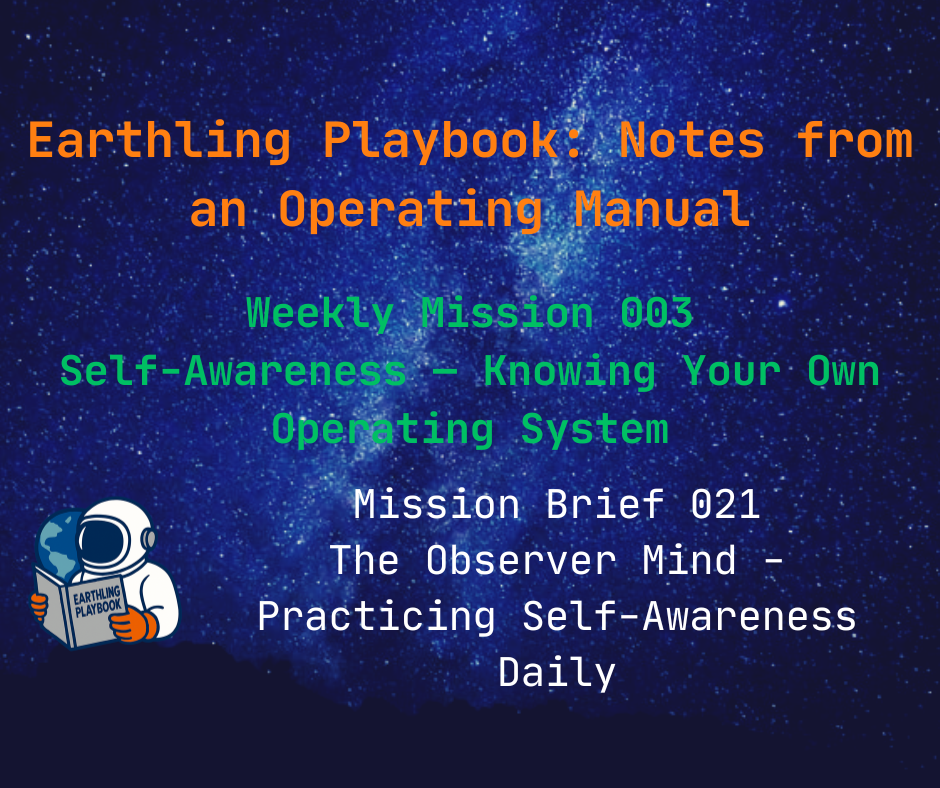
Mission Brief 021 – The Observer Mind
Practicing Self-Awareness Daily
Self-awareness isn’t a one-time exercise — it’s a daily rhythm. The key skill is learning to step back and watch yourself in real time: observing thoughts, emotions, and choices from a slight distance. This “observer mind” doesn’t judge; it simply notices.
By practicing this, you create a gap between stimulus and response — the small pause where choice lives. Instead of being swept along by old roles, blind spots, or automatic triggers, you can respond with intention.
Awareness lives in micro-moments:
- the pause before reacting
- the breath before speaking
- the check-in before choosing
These small acts of noticing build the muscle of awareness, keeping you grounded even when life gets messy.
You don’t need a retreat or an hour of journaling to practice self-awareness. You only need seconds of presence. Anchoring awareness to everyday transitions — starting your computer, finishing a phone call, brushing your teeth — creates space to reflect, recalibrate, and respond with intention.
Fun Factoid
Research shows that even a 30-second pause to reflect can reduce cortisol levels and improve decision-making. Mindfulness studies also find that a few minutes a day of observing thoughts without judgment can reshape brain pathways linked to stress and emotional regulation.
Why It Matters
Awareness only matters if it’s applied. Daily observation turns insight into habit. It helps you stay steady in tough conversations, aligned with your values under pressure, and intentional in everyday choices. Building awareness into your daily flow makes you less reactive, more resilient, and more agile in how you respond.
Field Notes
I’ve started using small “check-in cues” throughout my day — like before opening email, starting my computer, or sitting down with my morning tea. I ask myself: What am I feeling right now? What story am I telling myself? Am I aligned with my values? That micro-pause takes less than 10 seconds, but it shifts me from autopilot to intentional.
Your Mission
Pick one anchor moment today — something you already do (like starting your computer, sitting down to eat, or stopping at a red light). When it happens, pause for 30 seconds and ask:
- What am I feeling?
- What do I need?
- What matters most right now?
Notice how this simple check-in influences your tone, pace, or decisions.
“Between stimulus and response there is a space. In that space is our power to choose our response.” — Viktor Frankl
Reflection
Where can I create small “spaces” in my day to check in?
What changes when I notice myself in the moment instead of after the fact?